-
Housing wealth
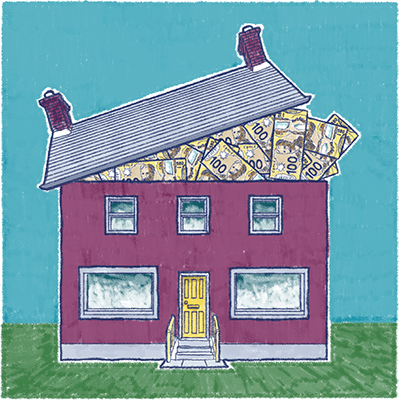
Many older home owners have reaped big financial gains from rising home prices, thanks to the good timing of having bought into the housing market decades ago. But the same rising prices that boost wealth for older demographics are crushing affordability for younger people. Some older Canadians may use additional wealth to support their kids (or grandkids) dreams of home ownership by contributing to down payments or mortgages. While individually warm and fuzzy, such admirable acts of intergenerational solidarity do nothing to challenge systemic inequity at the heart of the housing crisis.
-
Income security
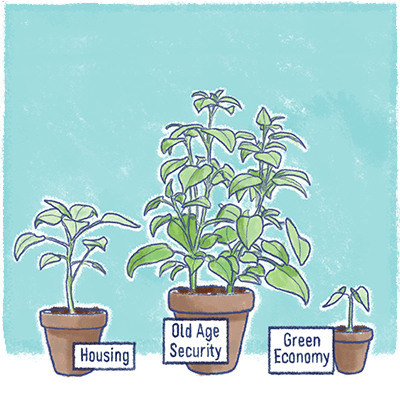
It can be hard for Canadians to know what we pay for with our tax dollars, especially when we rarely discuss some of the largest expenditures. This is especially true when more money goes into programs that are well known and long established, like Old Age Security (OAS). Even though increases in spending on OAS dwarf expenditures on things like the green economy, child care or housing, they are seldom discussed or debated. Canadians hear more about new boutique programs with small price tags, than they do about the billions treated as ‘baked in’ for seniors’ income security. We should be proud that these investments helped make seniors the least poor age group in Canada – but we also should be concerned that same urgency (and money) is lacking when it comes to addressing poverty and vulnerability in young families.
-
Expanding medical care
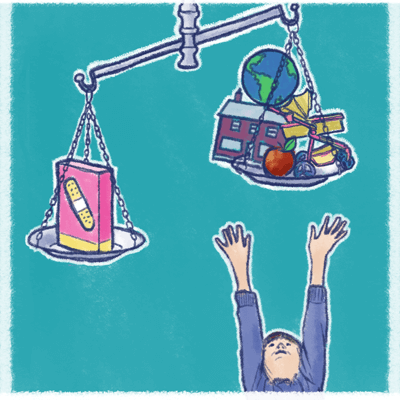
As Canada’s population ages, demand is growing to invest more in medical care, pharmacare, and long-term care. There’s good reason to make these investments, given evidence about potential positive impacts on health, access, and equality. But even good programs must be paid for, and paid for fairly. This means confronting questions about who is paying what now, and who is best able to contribute a bit more. Young people already shoulder a higher tax burden than earlier generations, while also struggling with deteriorating wages and higher costs for education, housing and child care. Older Canadians enjoy more wealth than any other demographic – but still leave bills unpaid for the services they want and use. If we want to expand seniors’ services, it is reasonable to explore how some of the wealth accumulated by older generations can help cover the cost.
-
Spending across the life course
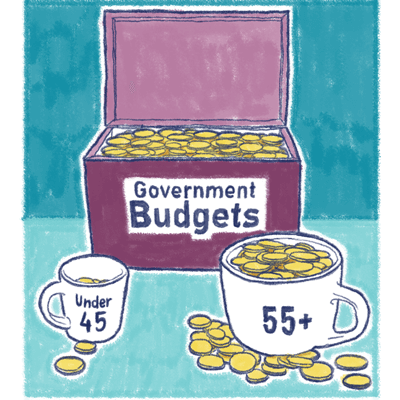
Canadian governments invest far more in each senior than in each person under age 45. Health research confirms that investment early in the life course can shape lifelong wellbeing and save money, but escalating spending on medical care and public pensions means less money left over to invest in things that matter for younger people. Squeezing entire generations in their prime child-rearing years is contributing to persistently high rates of early childhood vulnerability across Canada, because parental stress is contagious to kids. We will always need to spend more on medical care and income security in our later years. But we should care equally about promoting the wellbeing of each age group, from the early years onwards.
-
Paying taxes
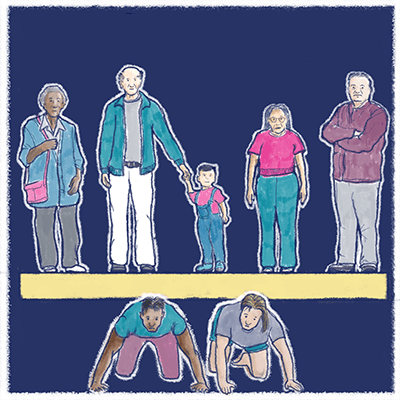
When today’s seniors were working, the taxes they paid did not fully cover the cost of the services they want and use in retirement – leaving working age taxpayers to underwrite the wellbeing of older Canadians to a far greater extent today than in the past. You might think this is an intractable problem, because the solution would have required collecting sufficient taxes before seniors retired – but there’s another option. Shifting taxes towards wealth (and not just for the uber rich) could raise revenue from windfalls gains in housing wealth to cover growing costs of services for seniors, as well as other programs that benefit younger generations.
-
Avoiding the worst risks of climate change
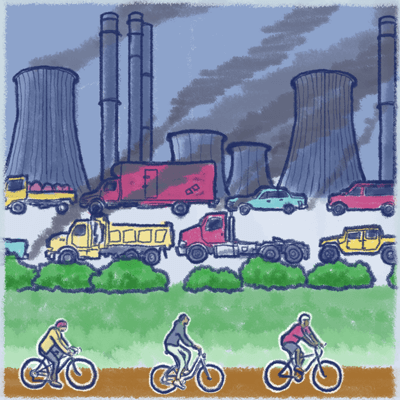
The economic and social disruption required to shift to a green economy, and the responsibility of mitigating growing climate risks, rest disproportionately on younger people who will live longer with the effects of climate change. These burdens have landed squarely on younger and future generations because of the failure of those before them to act urgently – and therefore incur some of the costs and inconvenience of adaptation. Now, the escalating climate crisis is arguably the largest debt to be passed from one generation to the next in all of human history.
-
Passing on government debt

Today’s younger Canadians inherit 3 times more government debt than young adults in the late 1970s (even before adding pandemic spending). Larger debts are the predictable result of increasing spending faster than revenue – and failing to be transparent about the risks of this approach. New spending has largely funded increases in medical care and income supports for those age 65+. But political leaders are unwilling to ask older Canadians to contribute a fair share to the cost of these programs – despite the greater capacity many have to pay, thanks to growing housing wealth. Instead, governments have adapted by increasing debt loads and cutting spending elsewhere, notably on programs and services for younger Canadians.
-
Political representation
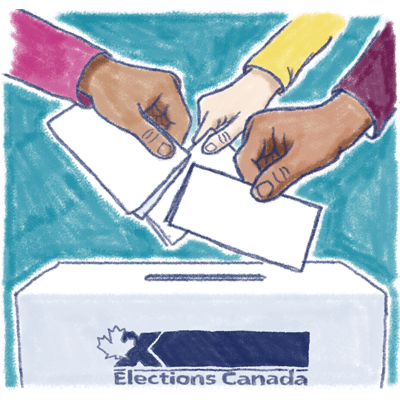
Politics responds to those who organize and show up. Older Canadians are more likely to cast a ballot in Canadian elections, plus powerful lobby groups work hard to protect favourable tax measures for seniors and push for more public spending on those age 65+. While voter turnout among younger people is on the rise, the fact that fewer take part in elections means that politicians risk little by failing to respond to the needs of younger demographics.
Help us build a Canada that works for all generations.
The more people we have behind us, the more loudly we can amplify our collective voices in the world of politics. Sign up for periodic email updates about our progress and opportunities to get involved.