-
Getting an education
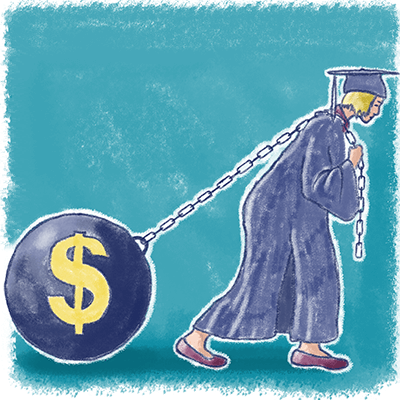
Younger generations are more educated today than in the past. Despite Canada’s skills deficit and the credentials required to compete in the information economy, the amount governments spend per person on post-secondary has declined. The result is ballooning student debt. These trends are pushing post-secondary education out of reach for lower-income students, who are disproportionately Indigenous and racialized.
-
Getting a (good) job
Good jobs with decent wages (never mind health benefits, pensions, and paid vacation) are becoming harder to find. Young workers are more likely to have part-time, contract, gig, and other forms of precarious work – not the full-time, secure positions more often available to previous generations. And even for those who have jobs, their hard work doesn’t pay off they way it used to, with average wages declining. When falling wages meet high and rising prices on things like homes and child care, the result is young people squeezed for time and money.
-
Paying taxes
Working age taxpayers are underwriting the wellbeing of older Canadians far more now than in the past. When today’s seniors were working, the taxes they paid did not fully cover the cost of the services they want and use now, in retirement. The smaller generations that followed the baby boom have fewer workers paying taxes to cover seniors’ outstanding bills, so more of each worker’s taxes must go towards these costs. The result is less money left over to invest in things that matter for younger generations – like child care, postsecondary, affordable housing, and climate change. For decades, this trend has resulted in Canadian governments investing more in those age 65+ than in those under age 45 – despite the fact that seniors are less likely to be poor than families with kids.
-
Buying a home
Many young people are locked out of the housing market by skyrocketing prices that have left earnings far behind. Today a young person must work far longer to save a down payment on an average home (especially in our largest cities) compared to when baby boomers were shopping for homes. Hard work no longer pays off for young people in terms of covering the major cost of living – housing. Canada is slow to fix a housing system that is crushing affordability for young people because we are addicted to the wealth generated by rising home prices, much of it going to older home owners lucky enough to get into the market decades ago. Housing wealth is a key source of intergenerational inequity in Canada today.
-
Starting a family
Young people face the prospect of big trade offs to start a family today. Decisions about family are squeezed between declining wages, runaway home prices, child care that costs as much as a rent or mortgage payment, inadequate parental leave, and insufficient work-life balance.
Squeezing entire generations in their prime child-rearing years is contributing to persistently high rates of early childhood vulnerability across Canada – because parental stress is contagious to kids.
-
Adapting for an uncertain future
To avoid the worst climate dangers, young people today must change where they work, what they eat, how they commute, how they holiday – and much, much more. Research confirms the enormous impact these pressures are having on the wellbeing of younger generations. The burden to adapt falls disproportionately on younger people, because older generations preferred to sidestep the challenging adaptations required by the climate crisis, leaving future generations with a massive climate debt.
-
Shouldering government debt
Today’s younger Canadians inherit 3 times more government debt than young adults in the late 1970s (even before adding pandemic spending). Larger debts are the predictable result of increasing spending faster than revenue – and failing to be transparent about the risks of this approach. New spending has largely funded increases in medical care and income support for those age 65+. But political leaders are unwilling to ask older Canadians to contribute a fair share to the cost of these programs and services – despite the greater capacity many have to pay, thanks to growing housing wealth. Instead, governments have adapted by increasing debt loads and cutting spending elsewhere, notably on supports for younger Canadians.
-
Building wealth
Older Canadians control the large majority of Canada’s wealth. This is in part a function of accumulating assets over the life course, but it also reflects that obstacles to wealth creation are growing for younger generations. The high cost of post-secondary education, housing and child care, combined with declining wages, are a toxic combination for financial security. Primary wealth creating assets – likes homes – are less accessible to younger people. Those who have managed to claw their way into the housing market may have seen their net worth increase, but often alongside big mortgage debts required for today’s inflated prices.
Help us build a Canada that works for all generations.
The more people we have behind us, the more loudly we can amplify our collective voices in the world of politics. Sign up for periodic email updates about our progress and opportunities to get involved.