The Bank of Canada Can Use Its Mandate Review to Shape Home Prices and Affordability
During a housing affordability crisis, all available policy tools should be aimed a lowering costs for Canadians. Along with other financial and housing leaders, we're asking the Bank of Canada to update it's approach to housing price inflation to make sure this harmful trend informs monetary and interest rate decisions.

I’m excited to share some progress on a key policy issue we've been working on here at Generation Squeeze for the past few years, as part of our push to restore housing affordability.
Last week, we had the opportunity to participate in the Bank of Canada’s mandate review. Every five years, the Bank renews its mandate, the formal agreement with the federal government that guides its efforts to keep inflation low and the economy stable. This matters for housing because the Bank’s main financial lever, interest rates, has major effects on home prices. Taking part in the review gives us a rare opportunity to ensure the mandate of Canada’s central bank supports housing affordability.
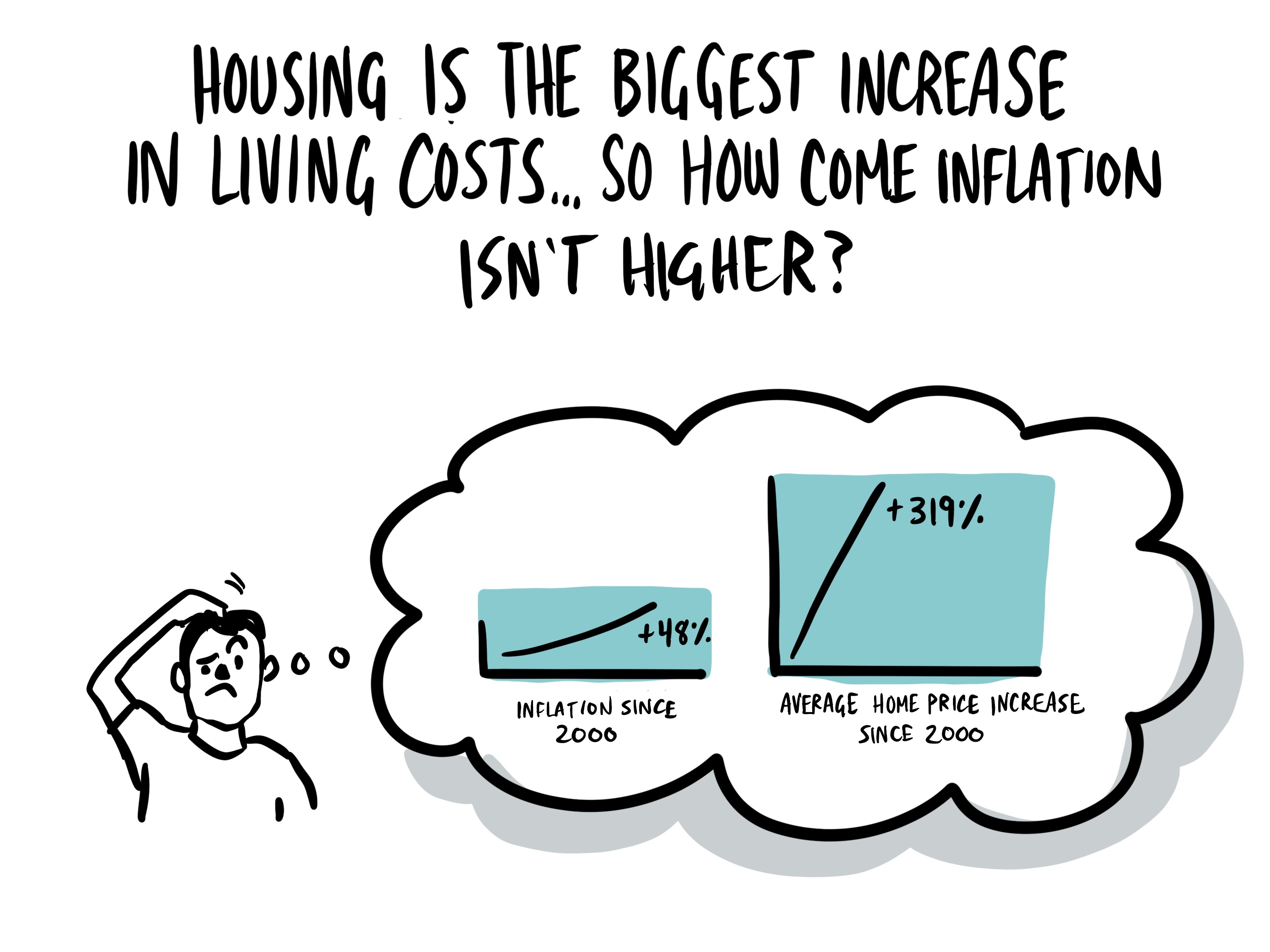
We met with senior advisors at the Bank to explore what’s needed to better align monetary policy with the goal of making housing more affordable. Right now, Canada’s primary measure of inflation, the Consumer Price Index (CPI), doesn’t adequately account for swings in home prices. That’s because the CPI was designed by Statistics Canada to track the cost of owning a home, not purchasing one.
The Bank of Canada tries to keep inflation under control by raising interest rates when prices across the economy rise too fast. Since the CPI largely ignores increases in home prices, by relying on this tool to measure inflation, the Bank often doesn’t respond with higher interest rates when home prices surge upward.
We saw this play out dramatically during the COVID-19 pandemic.
In March 2020, the Bank of Canada cut interest rates to near zero to support the economy. Over the next year, home prices rose by 21%, fueled in part by the cheap credit that low interest rates help make available. Yet the CPI stayed around 2%, barely affected by rapidly rising home prices.
Interest rates remained low for another year, during which home prices jumped another 28%. It wasn’t until two years into the pandemic, when rising gas and grocery prices pushed the CPI higher, that the Bank began tightening monetary policy. Ironically, it was these unrelated factors, not concern over housing affordability, that finally cooled the housing market.
As I wrote at the time, the skyrocketing home prices crushing affordability for many younger Canadians and renters of any age were curbed by accident, not by design.
Happily, as part of its 2026 mandate review the Bank is exploring how monetary policy affects the housing market, and considering ways to update its processes to better support housing affordability. A perfect opening for us! In common cause with other leaders on financial and housing policy from The Conference Board of Canada, Common Wealth Canada, and Social Capital Partners, we brought our case to the Bank directly.
What we asked for is an update to the way housing costs are calculated in the CPI, so that it better reflects the cost of purchasing a home. The groundwork for this is in place already.
Following a meeting we had with Statistics Canada a couple of years ago to advocate for a new approach on housing in the CPI, Canada’s leading number crunchers published a report introducing a variant of the CPI that accounts for home prices directly. This alternate CPI was substantially higher than the current version over numerous time periods. If it had been used by the Bank of Canada to guide monetary policy in the past, higher interest rates may have been prompted. This, in turn, may have helped keep home prices from rising as dramatically as they did.
I’m pleased to report that the Bank was open to the proposal our coalition is advancing to introduce an alternative CPI that better captures changes in housing prices.
Bank officials acknowledged that there are limitations with the current method of measuring inflation, and were interested in the specific solution we proposed. They asked lots of questions, and together we actively explored how this idea could work in practice.
Given their positive response, we feel optimistic that this change could really happen, and it would make a real difference. By measuring inflation in a way that better captures home values, the Bank would be able to tighten interest rates in response to rising prices – rather than keeping rates too low for too long, driving housing prices higher.
Bringing our partners together with the Bank, and hearing that they all recognize the problem and agree it’s something that can be solved, was an important step in building momentum. We’re looking forward to continuing to participate in the Bank’s review process. Plus, we’ll be meeting with federal officials responsible for Statistics Canada, to keep applying pressure for change.
We’ll keep you updated on any new developments!