Oct 07, 2026
To improve affordability and reduce poverty, Gen Squeeze has the best OAS reform plan
Like the Canadian Association of Retired Persons and the Bloc Québécois, we want to make changes to Old Age Security. However, the reforms Gen Squeeze proposes will achieve far more, at a lower cost.
Andrea Long
/November 10, 2025
The Canadian Association of Retired Persons (CARP) and the Bloc Québécois (BQ) want seniors to have the support they need at a time when living costs are rising. Gen Squeeze shares this goal, which is why we have a plan to virtually eliminate seniors’ poverty.
Like the CARP and the BQ, we want to make changes to Old Age Security (OAS). However, the reforms we propose will achieve far more, at a lower cost. Our plan delivers:
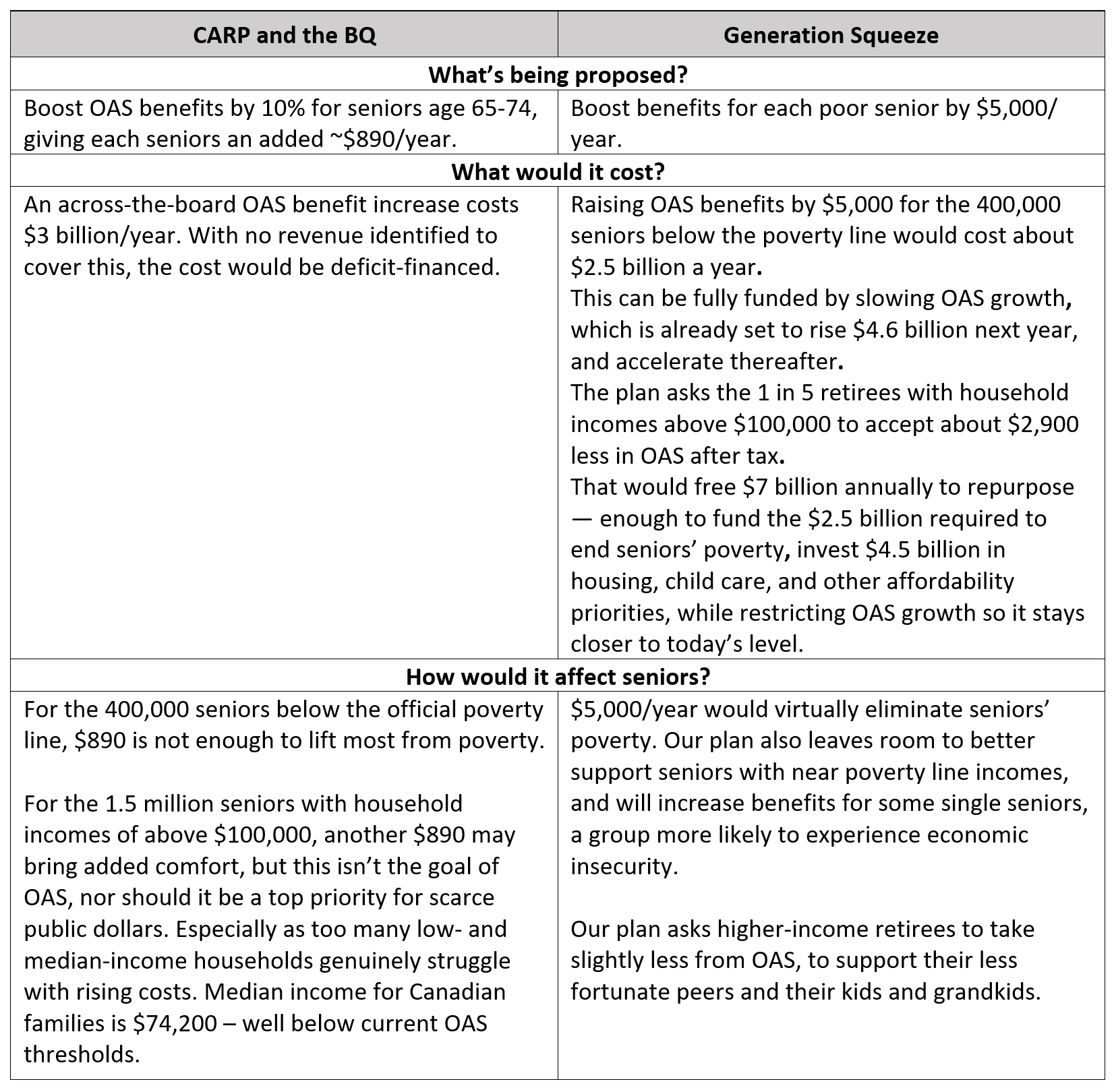
- $5,000 for every one of the 400,000 seniors who fall below the official poverty measure. That’s five times more support for each poor senior, compared to the 10% increase in OAS benefits proposed by CARP and the BQ.
- A higher OAS clawback for single seniors, who tend to face more insecurity.
- Billions more for additional affordability measures, like housing, postsecondary and child care.
- No new cost to taxpayers – our plan pays for itself with no deficit financing.
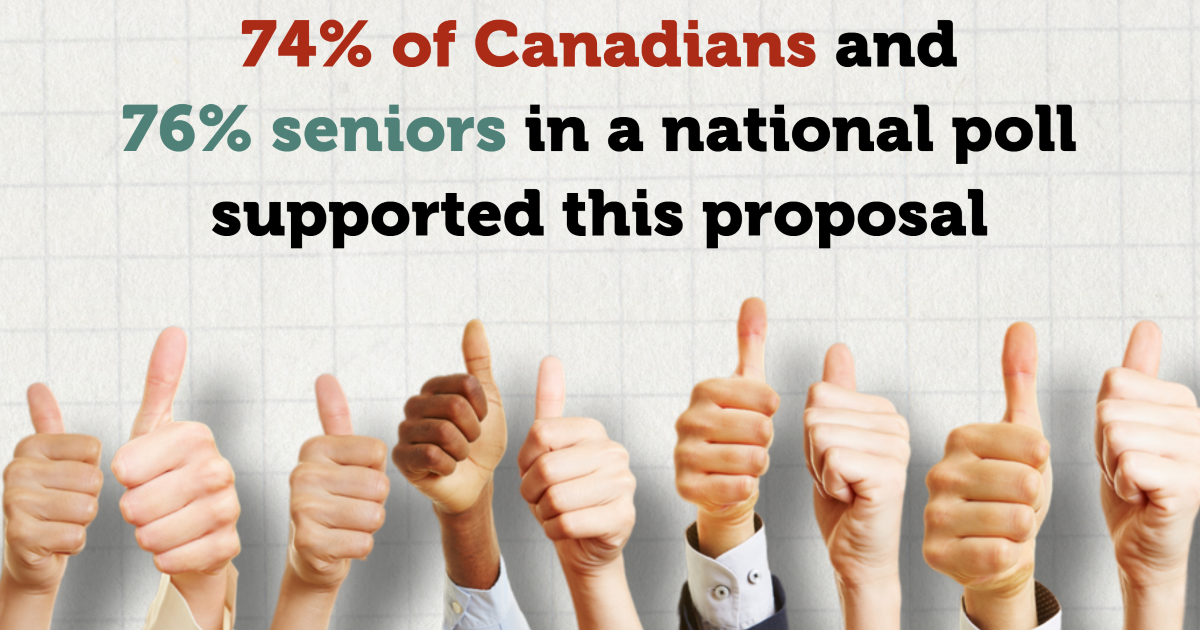
A growing number of pundits, politicians, media and community leaders agree that OAS needs reform. Three-quarter of retirees themselves support the Generation Squeeze plan. Both Mark Carney and Pierre Poilievre have called out the need for OAS to be updated. Agreement spans the political spectrum, left, centre and right.
Ottawa has a unique opportunity to respond to this convergence by modernizing OAS, and leading the way to help poor seniors, their kids and grandchildren, and taxpayers.
In the 75 years since OAS was created, Ottawa has allowed it to drift too far from the original aim of protecting insecure retirees. Today, OAS delivers $18,000 subsidies to retired couples with $182,000 in income – while leaving 400,000 seniors in poverty. This inefficient design has helped balloon OAS to nearly 1/5 of the federal budget, and prompted the Auditor General to conclude it’s unclear if OAS is meeting its objectives.
An across-the-board increase to OAS is a costly and poorly targeted way to help those at-risk, because it delivers the same support to all seniors regardless of income or need. Helping the lowest income retirees is a duty, but subsidizing retirees who have six figure incomes squanders scarce public dollars. The Globe & Mail’s Financial Facelift column delivers weekly examples of retirees with millions in assets claiming OAS.
Policy modelling reveals a better way to realign OAS with the goal of supporting financially vulnerable seniors: ask retirees with household incomes over $100,000 to take slightly less from OAS. About 1 in 5 retirees would see a reduction of ~$3,000 after tax, while some single seniors would receive more.
A $100,000 threshold remains far more generous than the Canada Child Benefit cut-off ($81,000), and is well above median family income ($74,200). Yet this one incremental change will save $7 billion/year, enough to:
- Virtually eliminate seniors’ poverty by boosting benefits by $5,000/year, at a cost of $2.5 billion. The BQ’s proposed $890 increase isn’t enough to lift most out of poverty.
- Generate $4.5 billion to invest in affordability and income security measures for young and working age people – like housing, child care and boosting other benefits.
- Reduce ageism in federal benefits. Seniors can have $100,000 more income than families before income security benefits are clawed back, despite seniors having the lowest levels of poverty and highest levels of wealth. Research by the National Institute on Ageing at Toronto Metropolitan University reveals older residents in Quebec already report the highest levels of financial security in the country.
Good financial stewardship means making sure public dollars work as hard as the people who earned them. Choosing to leave some seniors in poverty while subsidizing others with six figure household incomes fails to live up to this core value. By reforming OAS, Ottawa has an opportunity to leverage its influence in Parliament to help seniors and young people alike.
About Andrea Long
Andrea is the Senior Director for Research and Knowledge Mobilization at Generation Squeeze.
Get Updates
*By clicking "Sign up", you consent to receive periodic updates from Generation Squeeze by email, text and/or phone. You can unsubscribe or text STOP at any time. Message and data rates may apply. Read our privacy policy.
Search
Latest posts
Oct 06, 2026