Introduction
Each year, governments create budgets that set out priorities and assign money to them. If something’s not in the budget, it’s pretty unlikely to happen. That’s why pushing governments to design their budgets to meet the needs of all generations is a big part of what we do.
For decades, governments have been slow to invest in what shapes wellbeing for younger generations, like child care, housing affordability, postsecondary education, or climate action. Spending on younger Canadians hasn’t even kept pace with economic growth. If it had, we’d be spending $19 billion more per year—enough to cover the cost of $10 a day child care, or to increase postsecondary funding by 50%, or to invest in affordable housing over a single year what the National Housing Strategy spends over almost a decade.
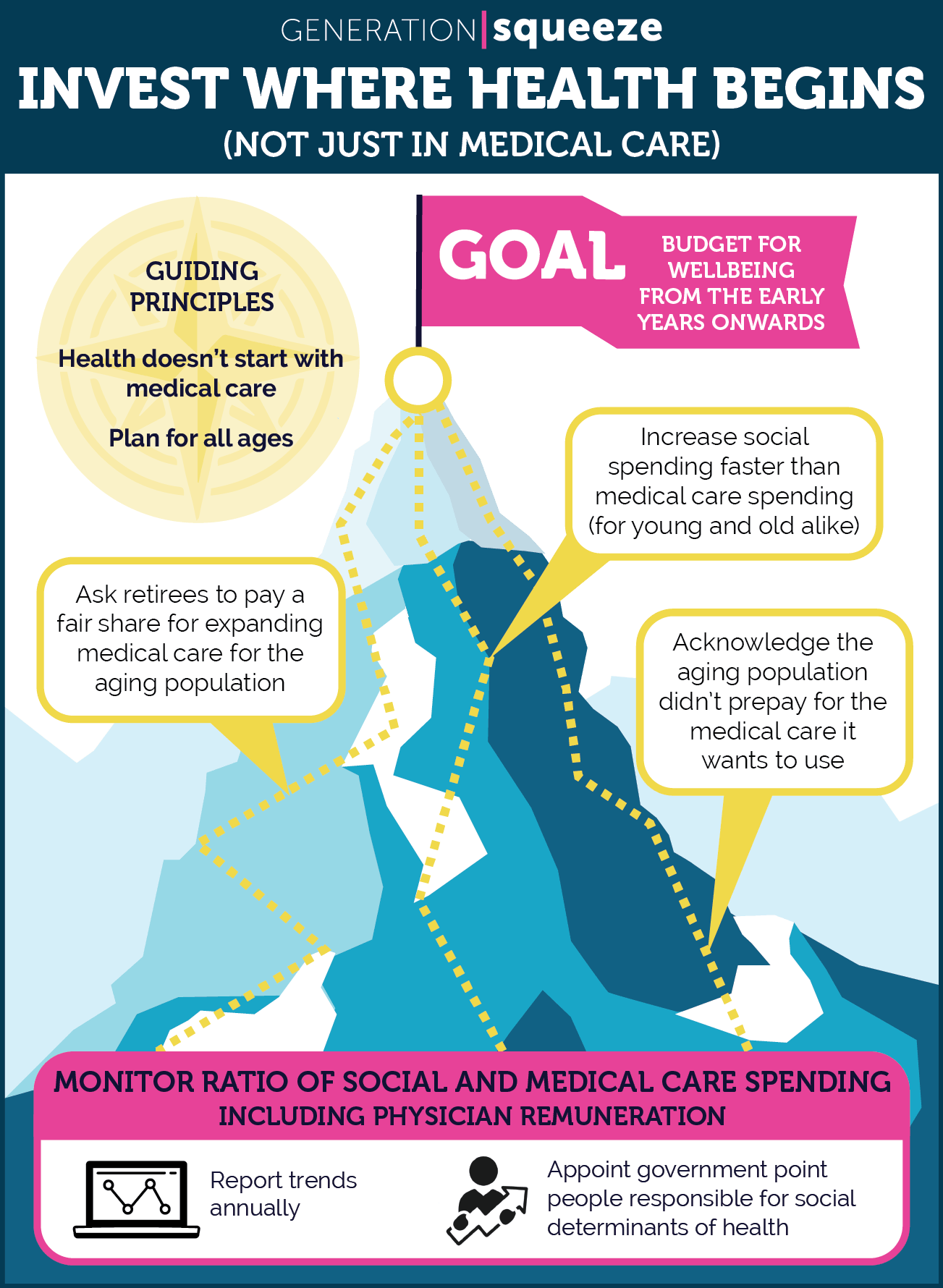
We all want to ensure the wellbeing of our aging parents and grandparents, and that means investing more later in the life course when health and support needs are higher. That’s why we invest the lion’s share of public resources in services used mostly by retirees, like medical care and old age security. Yet we also know that the conditions into which we are born, grow, live, work, and age are especially important at early ages. Improving these conditions can prevent bigger and more costly problems down the road. Since we only have one chance to get people off to a good start, we have a responsibility to plan and invest in young people’s wellbeing, just as much as the aging population.
It's time to recognize that building a Canada that works for all generations requires budgets that invest and raise revenue fairly for all ages. That's why we put together this game plan for generationally fair budgets.