The Doctor Shortage “Myth”
A new report from the Generation Squeeze Lab at UBC challenges one of Canada’s most common health-care narratives: that long wait times are the result of a “doctor shortage.”

Physician supply has outpaced population growth and age-adjusted demand, yet access to medical care remains strained because governments updated Canada Pension Plan revenues for aging boomers — but never modernized medical-care funding.
A new report from the Generation Squeeze Lab at UBC challenges one of Canada’s most common health-care narratives: that long wait times are the result of a “doctor shortage.”
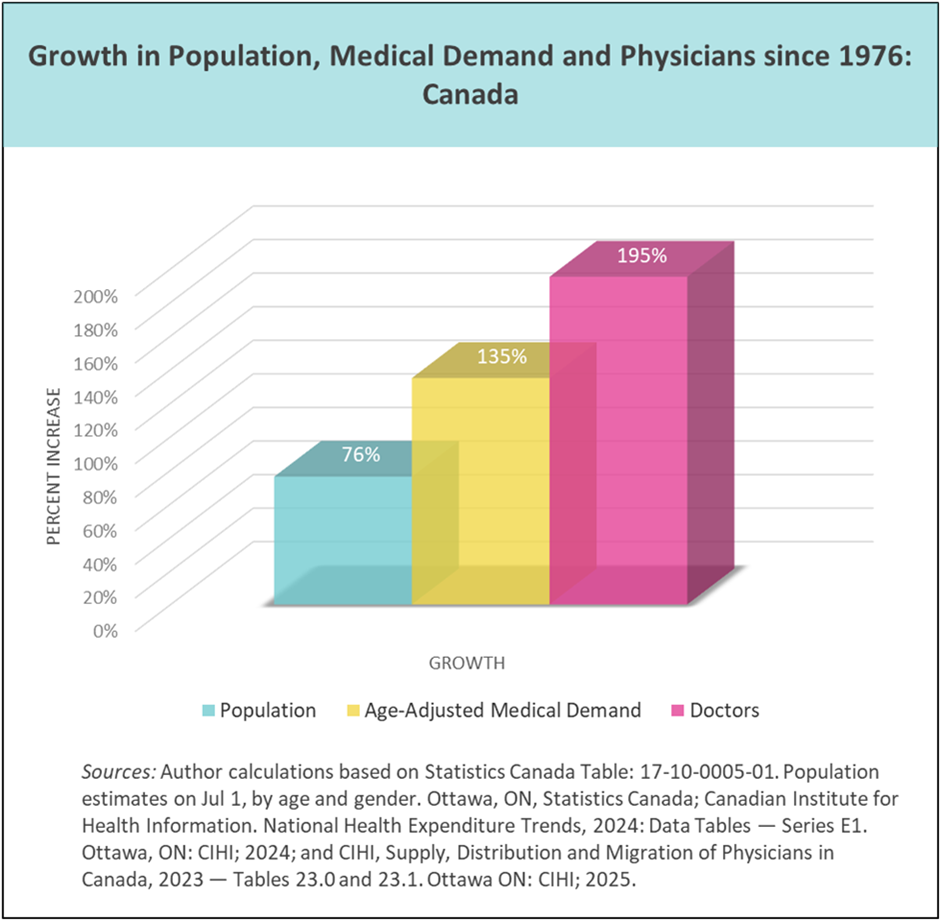
The data show the truth is more complicated.* Canada now has nearly triple the number of physicians it had in the 1970s. This 195 percent increase far outpaces both population growth (76 percent) and the rise in age-adjusted medical demand (135 percent).
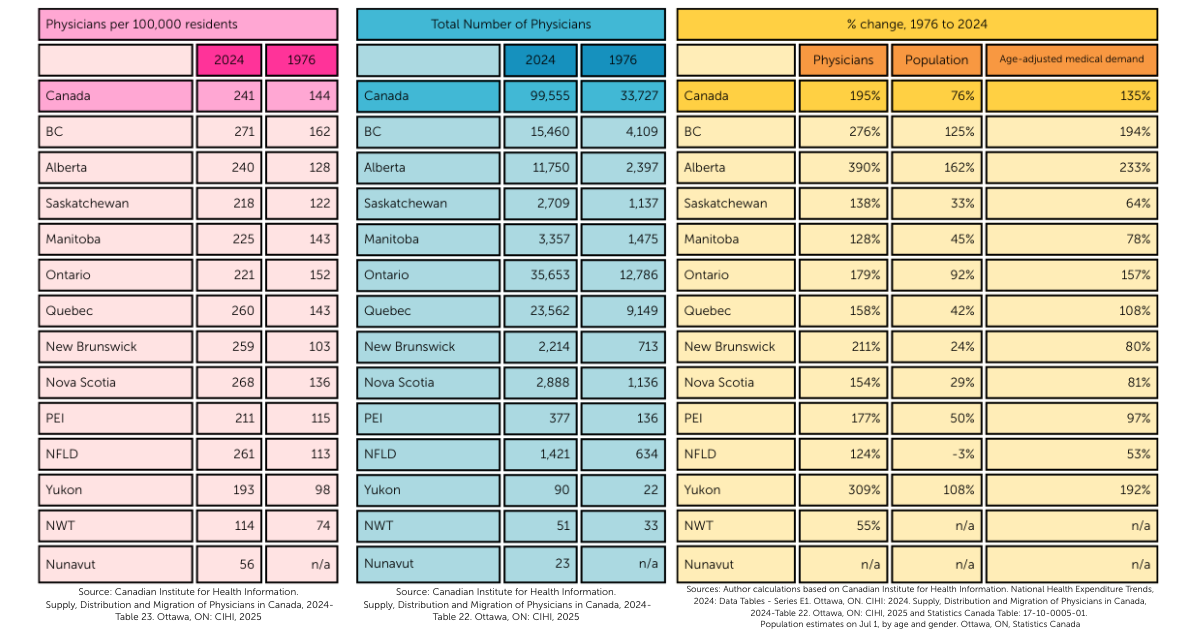
*Physician counts have been updated using CIHI data released after the study was finalized.
Doctor supply has grown faster than medical demand, yet access feels worse. This is because the issue isn’t the number of doctors — it’s the surge in demand driven by population aging, combined with the fact that governments didn’t collect enough revenue from boomers when they were younger. That under-funding now crowds out investments in prevention – and leaves space for governments like Alberta to claim shortages justify expanding private access.
If Canadians are still waiting to see a family doctor or specialist despite nearly tripling the number of physicians, then the real issue isn’t supply — it’s the flawed narrative that keeps us focused on “doctor shortages” instead of the structural reforms we actually need. It’s also time to acknowledge that this narrative conveniently bolsters efforts by medical lobbies to push for higher pay.
Why more doctors haven’t solved medical care access challenges
Aging boomers drive disproportionate demand
Retirees use roughly four times more medical care than adults under age 50. As millions of boomers entered high-demand age groups, the effective patient-load increased dramatically – although not nearly as fast as the number of doctors increased.
Doctors work fewer hours today
The physician headcount is way up — but total physician hours have grown more slowly, as doctors today work fewer weekly and annual hours than in the 1970s. Some research suggests that fee-for-service incentives encourage “target incomes,” which may reduce clinical hours once that target is reached. This helps explain why Quebec is now experimenting with measures to compel physicians to see more patients – a response that recognizes declining physician hours but still doesn’t address the deeper revenue and prevention gaps driving overall demand.
Perverse staffing incentives weaken primary care
Higher-paying hospital roles draw physicians away from community family medicine, while hospitals prefer doctors (who bill provincial plans) over nurses (paid from hospital budgets).
Governments under-invest in the conditions that create health
Decades of health science show housing, income, child care, education, and environmental quality matter more for long-term health than medical care. Yet provinces now spend much more on medical care than on these building blocks for a healthy society — the reverse of their priorities in the 1970s.
Imagine a concert where organizers triple the number of ticket booths — but each booth is open fewer hours than it used to be. That’s Canada’s medical care system. We’ve added doctors faster than age-adjusted demand has grown, but physicians aren’t working the same number of hours they once did. And because governments haven’t invested in preventing illness in the first place, more people keep joining the line.
What needs to happen next
Gen Squeeze calls for governments to:
- Confront the demographic arithmetic behind rising medical demand
- Modernize revenue systems so financially secure boomers contribute enough to their predictable aging-related costs, rather than leave unpaid bills for those who follow
- Fix staffing incentives across the health workforce
- Reinvest in the social and ecological foundations of health
Access the full report: Medical Budgets in an Aging Canada: Why Protecting Universal Access Now Requires Generationally Fair Revenue Reform