Making the case for the social-to-medical spending ratio
We’ve pulled together key Canadian and international research into a short, easy-to-read summary.
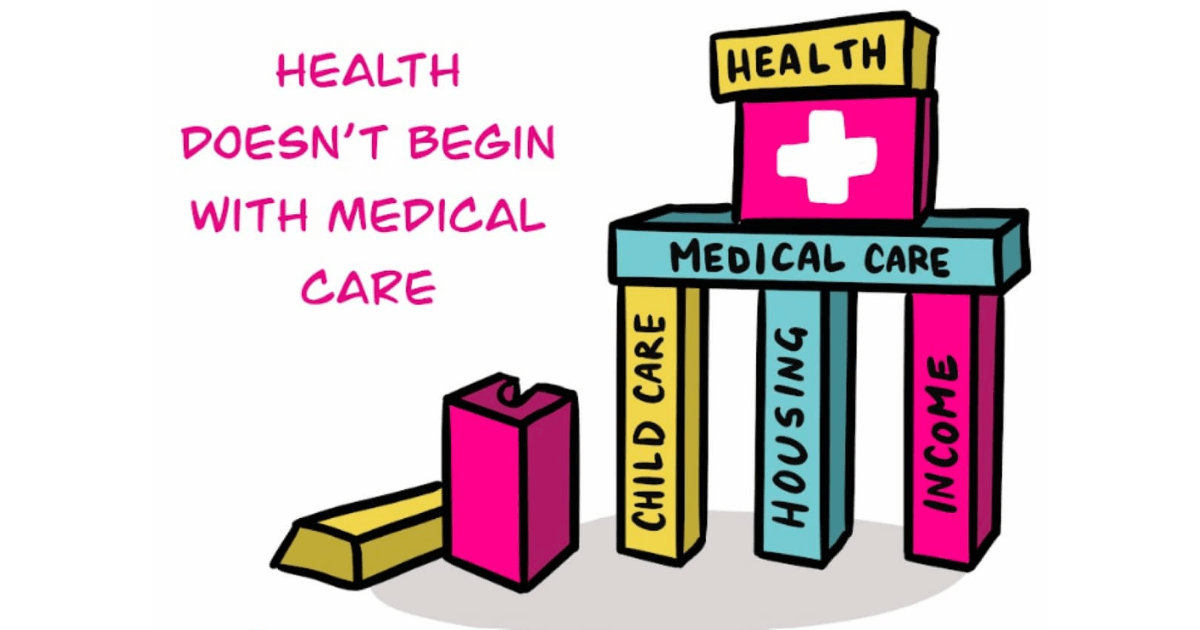
Medical care is essential — but it’s not what matters most for making people healthy.
Decades of science shows that health does not begin in hospitals and doctors’ offices. It begins in safe homes, adequate incomes, quality child care, education, and a healthy environment.
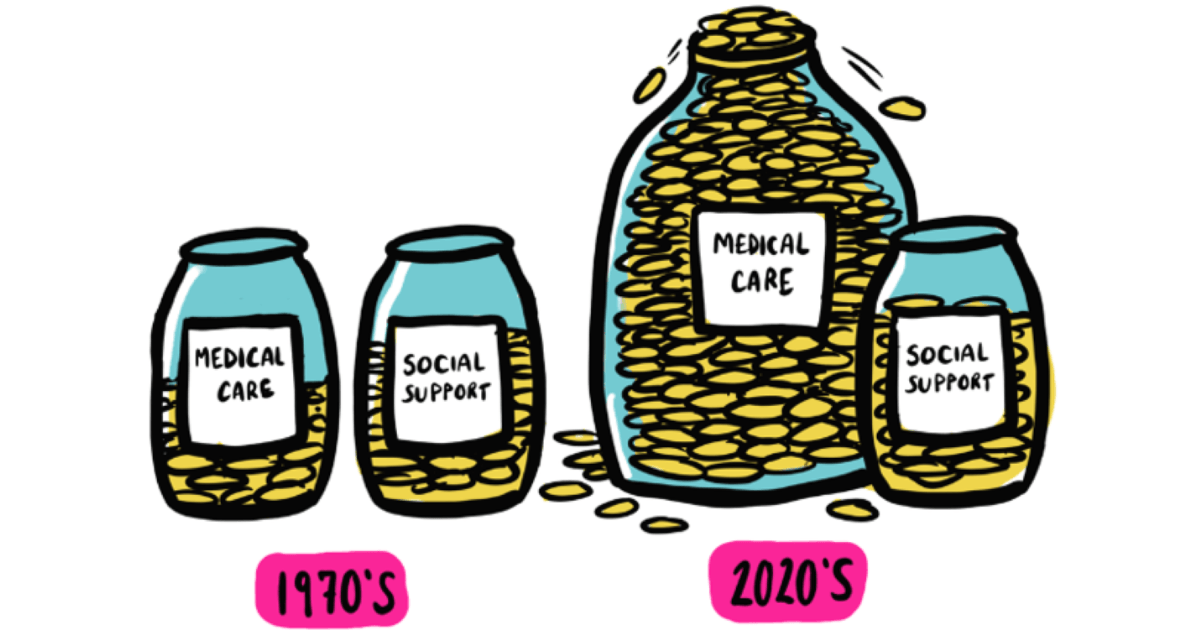
Yet over time, public spending has shifted away from these foundations. In the 1970s, provinces invested more in these building blocks of healthy societies than in medical care. Today, the opposite is true.
This shift has consequences.
When governments underinvest in the conditions that keep people healthy, more people become sick — and pressure on the medical system increases. That’s one reason increases in medical spending have not resolved access challenges, leaving patients frustrated by long waits and health workers burned out.
The first step in solving any problem is recognizing you have one. To equip governments with the tools to name and track the imbalance between medical and social spending, they need a new metric:
The ratio between spending on medical care, and spending on the social conditions that shape health.
All governments can use this tool to track and publicly report on how they are investing in health — not just treating illness and injury, but also the supports and services that help prevent sickness and promote and sustain good health.
Understanding medical spending relative to spending on the social conditions that shape health should become a standard and central part of budgets and fiscal reporting. When this balance is made visible, governments can make more informed decisions about protecting medical care while restoring investment where health begins.
This won't just make a difference around cabinet tables. It matters for you too.
Studies of the social-to-medical spending ratio consistently highlight the positive consequences of directing a larger share of governmental spending to social services than to medical care. Higher social spending is linked to improved physical and mental health outcomes in critical areas, like reducing avoidable deaths, reducing infant mortality, and increasing life expectancy.