Counter the naysayers
Once you take the brave step of starting a conversation… then what? When people push back against industrial pollution pricing, you don’t have to be an economist or policy expert to respond. Our myth-busting helps you respond to common arguments against pollution pricing with grounded, intergenerational, and pro-economic arguments for holding large polluters accountable.
Download our naysayer cheat sheet
-
The industrial pollution price is just a tax that kills jobs and hurts the economy…
Canada’s industrial carbon price is designed to charge major polluters only for the emissions they don’t reduce, while rewarding clean innovation. Companies that cut emissions more than required can sell excess credits, turning responsibility into revenue.
The real economic risk isn’t from the carbon price, it’s from climate inaction. Wildfires, floods, droughts, and extreme heat already cost Canadians billions. Without a price on pollution, these costs will keep rising. Our economy - especially sectors like agriculture, construction, and insurance - will keep taking the hit.
Canada’s industrial carbon price isn’t too high — it’s too low. That means we’re missing out on pollution cuts we could achieve. It also sends mixed signals to businesses trying to invest in cleaner technologies, and puts us at risk of facing carbon border tariffs from countries that are moving faster. In the long run, that could hurt Canadian jobs and our place in global markets.
The smart move is to strengthen carbon pricing, eliminate subsidies to high-emitting sectors, and reinvest in technologies that lower emissions and create jobs. Let’s reward the industries building the future — not the ones holding it back.
-
Carbon pricing doesn’t lower emissions — it’s just a money grab...
This myth has been thoroughly debunked. Studies from around the world, and here in Canada, show that carbon pricing works — especially for industry, where large emissions reductions can be achieved with relatively modest price signals.
Carbon pricing isn't just a revenue tool. It shifts the economics of decision-making, so it’s more profitable to pollute less. The goal isn’t to raise money — it’s to lower pollution. And it’s working. Don’t let misleading headlines distract from the evidence.
Canada's industrial pollution price includes built-in protections against something called carbon leakage — which is when big polluters move their emissions (and their jobs) to countries with weaker climate rules. These built-in protections against unfair competition from jurisdictions and businesses that aren't addressing climate risks are what make our industrial carbon pricing policy smarter and stronger, not weaker.
-
We can’t fix climate change alone — so why should our industries pay more...
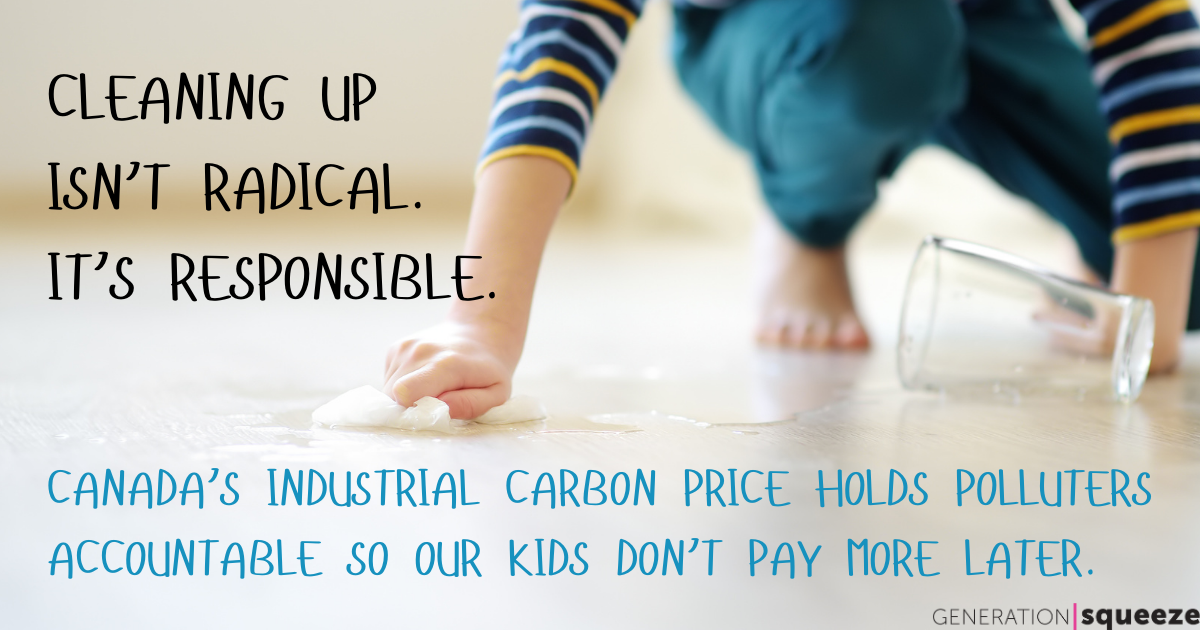
We don’t ask our kids to do what’s right only when others do. Why should we ask less of ourselves, or our industries?
Canada is one of the highest per-capita polluters in the world. While we may not produce the largest share of global emissions overall, our economic capacity and historical responsibility are significant. Taking meaningful action — including through industrial pricing — is how we earn the credibility to push others to act, too.
Just like Canadians cleaned up acid rain and phased out leaded gasoline, we can lead on industrial carbon pricing — and inspire international momentum. Doing nothing while pointing fingers is not leadership. And it’s not the legacy we want to leave behind.
-
Canadians don’t support carbon pricing...
Three-quarters of Canadians agree that politicians betray our kids when they propose to eliminate carbon pricing, because it forces young people to pay even more dearly down the road for the messes we leave behind. Support for pollution pricing is consistent across Canada, including among voters for each major political party.
Half of Canadians support the industrial carbon price. And more than 70% want the federal government to do more to address climate change, adapt to the risks it is creating, and protect nature.
Canadians are committed to leaving a proud legacy for their kids, grandkids and future generations. They know a key part of this is making sure those who follow get to enjoy things many older folks could take for granted – like summers without smoke, winters with snow and ice, or living forests instead of charred remains. Paying for our pollution will help us get there.

-
We need a strong economy — pollution pricing puts it at risk...
Pollution pricing helps our economy and markets work more efficiently. It ensures businesses account for environmental costs, encourages clean innovation, and future-proofs Canadian industry in a decarbonizing world. It also protects our long-term economic stability from climate-related shocks, while creating opportunities in clean tech, renewable energy, and climate-resilient infrastructure.
As the Centre for Future Work notes, failing to price pollution means continuing to subsidize outdated, high-emitting industries at the expense of future-focused growth. That’s bad policy and worse economics.