Event: April 30 Webinar - Why are we failing our kids?
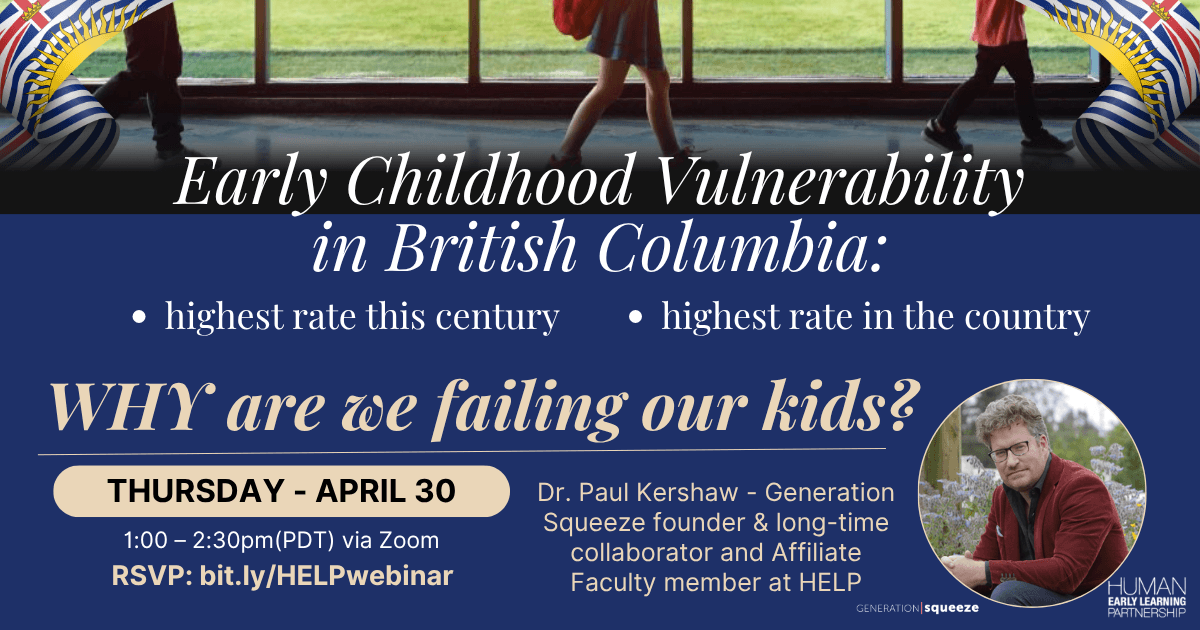
British Columbia now has the highest rate of early childhood vulnerability — and the highest of any province. This keynote asks a difficult question: if the research has been strong for decades, why has policy change been so limited?
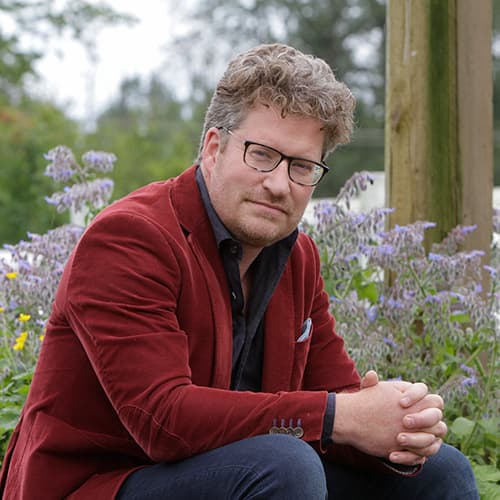
A quarter-century ago, I began my academic journey with the Human Early Learning Partnership (HELP) at UBC's School of Population and Public Health.
This month, I have the privilege of returning to mark HELP’s 25th anniversary — and to honour the remarkable people who built it: Clyde Hertzman, Hillel Goelman, Jacqueline Smit, Michele Wiens, Barry Forer, Martin Guhn, Lynell Anderson, Pippa Rowcliffe and many others whose work reshaped how we understand early childhood development.
Their legacy is extraordinary, and is proudly carried on today through the excellent leadership of Marianna Brussoni and her team.
HELP has shown — with decades of rigorous evidence — that early childhood conditions shape lifelong trajectories: from school success to health, to involvement with the justice system.
But anniversaries are not only for celebration. They are also for reflection — and accountability.
Because here’s the hard truth:
After 25 years of world-leading research, British Columbia now has the highest rate of early childhood vulnerability since HELP began monitoring — and the highest of any province.
This April 30th keynote asks a difficult question: if the research has been strong for decades, why has policy change been so limited? The answer lies less in evidence than in political choices about how governments allocate public resources. When spending growth flows disproportionately to medical care for older populations, fewer resources remain for the foundations of a healthy society — child care, education, poverty reduction, and family supports. The result is a pattern of public budgets that are, in effect, anti-child and anti-parent.
This talk will challenge child-serving organizations to focus their advocacy where it matters most: the budget decisions that determine how governments divide resources between the young and the old. We must call out ageist budgets that privilege older generations at the expense of their children and grandchildren — and put B.C. back on a path where wellbeing is built from the earliest years onward and people can thrive at every stage of life.
That’s how we can truly celebrate what HELP has taught us — by holding governments accountable to finally act on it.
April 30 | 1:00–2:30pm (PDT) - via Zoom
Please RSVP: bit.ly/HELPwebinar